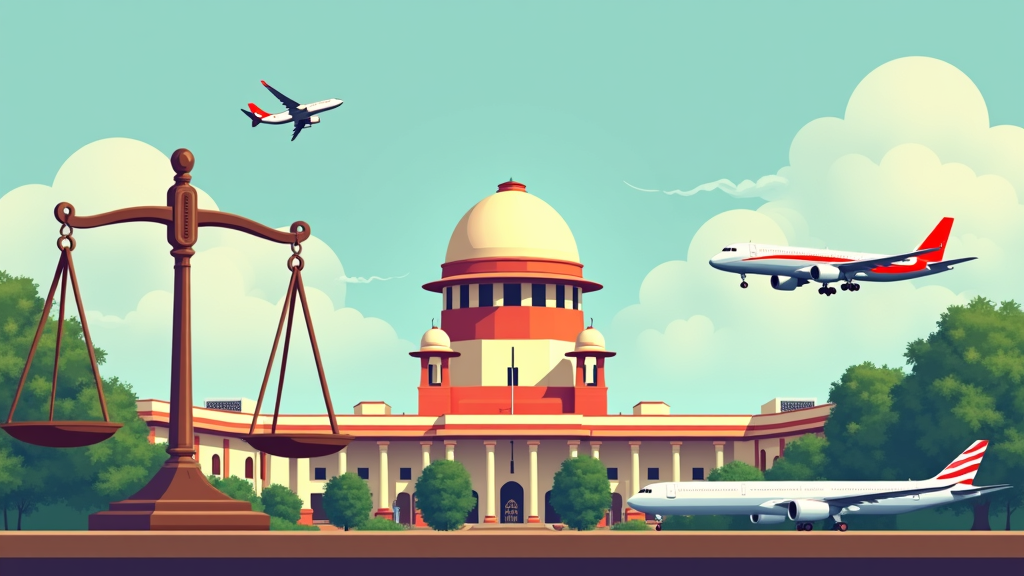
The Delhi Mumbai airports HRAB dispute has escalated into a significant legal confrontation, capturing the attention of the Indian aviation industry and policymakers alike. Supported by the central government, the Airports Economic Regulatory Authority of India (AERA) is gearing up for a Supreme Court hearing that could ultimately impact millions of air travelers. At the core of this dispute lies the staggering claim of Rs 50,000 crores for a hypothetical regulatory asset base (HRAB) by the airports’ operators, which, if successful, may lead to considerable increases in Mumbai airport passenger fees. The legal battle has brought forth concerns regarding the fairness of these financial demands and their potential repercussions on aviation regulations in India. With operator DIAL and MIAL contesting a previous ruling from TDSAT, the implications of this case are profound for both airport operators and passengers alike, making it a vital topic in the realms of aviation economics and passenger rights.
The ongoing contention surrounding the expected financial liabilities of the Delhi and Mumbai airports centers around a contentious legal issue known as the hypothetical regulatory asset base (HRAB). As the case heads to the Supreme Court, its ramifications extend beyond just the airport operators; it includes a significant financial burden that could alter air travel costs across India. The Airports Economic Regulatory Authority (AERA), under the aegis of the Ministry of Civil Aviation, is set to challenge claims that threaten to inflate passenger fees drastically. This legal tussle is not only pivotal for DIAL and MIAL but also for setting a precedent in how airport economic regulations are shaped in the country. Stakeholders and travelers alike are keenly observing how this HRAB legal battle unfolds, given its potential to redefine operational costs and government support in the aviation sector.
The HRAB Dispute: A Crucial Legal Battle for Delhi and Mumbai Airports
The ongoing legal confrontation surrounding the hypothetical regulatory asset base (HRAB) claim has escalated into a significant dispute for the operators of Delhi and Mumbai airports. The Airports Economic Regulatory Authority of India (AERA) now supports the Indian government’s position as they face off against Delhi International Airport Limited (DIAL) and Mumbai International Airport Limited (MIAL) in the Supreme Court. This case is pivotal not only because of the Rs 50,000 crore claim but also due to the implications it carries for passenger fees, which could skyrocket if the operators are successful in their pursuit of the HRAB claim.
Court proceedings are set to begin on December 3, adding urgency to the situation as calculations for passenger development fees hinge upon the outcome. The TDSAT previously ruled against the HRAB claim, leading the airport operators to challenge this decision. If the Supreme Court favors DIAL and MIAL, the potential for increased user development fees (UDF) raises serious concerns for air travelers. The historical context of this dispute relates to the public-private partnership framework initiated when the airports were privatized approximately twenty years ago, underscoring the need for clarity in aviation regulations in India.
Impact on Air Travelers: Potential Increases in Airport Fees
Should the court rule in favor of the airport operators, the ramifications for air travel could be drastic. Current projections suggest that the user development fee for passengers at Delhi could rise from Rs 129 to an astonishing Rs 1,261, while Mumbai could see fees escalate from Rs 175 to as high as Rs 3,856. These potential hikes would directly impact travelers who are already facing the pressures of fluctuating flight prices influenced by various operational costs.
The Ministry of Civil Aviation has indicated their commitment to representing the interests of passengers, emphasizing that an increase in landing and parking charges imposed on airlines could lead to further pass-through costs to consumers. With the current legal environment and challenges posed by DIAL and MIAL, the stakes are high as stakeholders await the Supreme Court’s decision, which will undoubtedly shape the future landscape of airport passenger fees in India.
The Role of AERA in Regulating Airport Tariffs
Established in 2009, the Airports Economic Regulatory Authority of India (AERA) stands as the watchdog over the tariff structures for major airports in India, including those in Delhi and Mumbai. The authority was put in place to ensure a balance between the financial stability of airport operators and the affordability of air travel for passengers. With the ongoing HRAB legal battle, AERA’s role is critical as it now must navigate the complexities of potential regulatory asset claims and their implications for tariff calculations.
As the case unfolds in the Supreme Court, AERA’s decisions will influence not only the financial health of the airport operators but also the operational viability for airlines and affordability for travelers. The calculations for regulated service costs hinge on AERA’s ability to appropriately assess the costs associated with the capital assets of the airports within the context of current aviation regulations in India.
Public-Private Partnership Model and Its Challenges
The public-private partnership (PPP) model under which Delhi and Mumbai airports operate has been critical in enhancing operational efficiency and infrastructure development. However, this model has increasingly come under scrutiny as airport operators demand compensation for hypothetical regulatory asset bases from the years before AERA could implement regulated tariffs. The potential fallout from this legal dispute emphasizes the challenges faced under such partnerships, particularly in the aviation sector.
The evolution of the PPP model over the past two decades raises questions about the valuation methodology for airport assets being utilized by DIAL and MIAL. The demand for including non-aeronautical assets in the regulatory asset base could fundamentally alter the existing economic landscape and burden air travelers with inflated costs. The operational strategies of airports in India will need to adapt accordingly to maintain affordable services amidst rising financial pressures stemming from this dispute.
Supreme Court’s Influence on Airport Fee Structures
The upcoming Supreme Court hearing will not only determine the outcome of the HRAB claims but also reshape fee structures at Indian airports significantly. A favorable ruling for DIAL and MIAL could establish a precedent that changes how airport tariffs are calculated across the nation. This potential alteration comes at a crucial time as the aviation industry is striving for recovery post-pandemic, making this legal decision even more impactful.
If the apex court decides in favor of the airport operators, it may also compel a re-evaluation of existing aviation regulations in India. This could inadvertently lead to heightened expenses associated with both user development fees and overarching tariffs applied to air travel, jeopardizing the affordability and accessibility of flights for the average passenger. Such changes could stifle growth in passenger numbers and affect the overall health of the aviation market in India.
Potential Consequences for Airline Operations
Airlines operating in and out of Delhi and Mumbai could face unprecedented financial strains if the Supreme Court rules in favor of the airport operators’ claims. Higher landing and parking charges, driven by increased user development fees for passengers, would likely lead airlines to revisit ticket pricing strategies and potentially pass these costs onto consumers. As a result, air travel could become significantly more expensive for the general public.
The potential for an increase in operational costs fundamentally challenges airlines’ pricing models, particularly as the industry recovers from the pandemic’s financial impact. Airlines may have to balance competitive pricing while managing rising fees, creating an environment that could limit service networks or hinder expansion plans. The ramifications of the litigation will ripple beyond airport fees; they may also affect airline profitability and market dynamics.
Government’s Stance: Supporting Passenger Interests
The Indian government has positioned itself firmly alongside the Airports Economic Regulatory Authority of India (AERA) in this legal dispute, emphasizing the importance of protecting passenger interests. Officials have expressed concern about the potential fallout of a ruling that favors DIAL and MIAL, projecting profound uplifts in ticket prices and overall travel costs. This proactive governmental support aims to mitigate the financial fallout for travelers in anticipation of the Supreme Court’s upcoming ruling.
Such government backing highlights a broader commitment to maintaining affordable air travel within the Indian aviation sector. By standing with AERA, the government seeks to promote a fair operational environment that discourages excessive fare hikes and protects consumer rights. This stance reflects a recognition of the vital role air travel plays in economic connectivity and accessibility across the country.
AERA’s Challenges in Regulating the Aviation Sector
As the regulatory authority responsible for overseeing airports in India, AERA faces significant challenges in navigating increasing demands from airport operators while ensuring economic fairness for passengers. The complexities of calculating regulated asset bases against fluctuating market dynamics require AERA to employ transparent methodologies that can withstand legal scrutiny, particularly in light of the ongoing HRAB dispute.
The authority must strike a delicate balance in its regulatory approach, addressing the financial objectives of airport operators like DIAL and MIAL while safeguarding consumer interests. The outcome of this ongoing legal battle serves as a reflection of AERA’s regulatory capabilities and its adaptability to evolving market conditions in the rapidly changing aviation landscape in India.
Looking Ahead: Future Implications for India’s Aviation Industry
The outcome of the HRAB legal battle will have lasting implications for India’s aviation industry, shaping the regulations governing airport fees and service quality for years to come. As the nation prepares for the Dec 3 Supreme Court hearing, stakeholders from all sides are closely monitoring developments. A ruling that favors the airport operators may permanently alter the trajectory of how services are charged and could redefine funding structures within the industry.
In the event of a negative ruling for DIAL and MIAL, there may also be increased pressure to reexamine expense management and service delivery practices at major airports. The government, regulatory authorities, and airline operators will need to strategize and adapt to any changes that arise. Ultimately, the implications of this legal case far exceed immediate financial ramifications, potentially influencing the future landscape of aviation regulations and operations throughout India.
Frequently Asked Questions
What is the Delhi Mumbai airports HRAB dispute about?
The Delhi Mumbai airports HRAB dispute involves a legal battle concerning a claim for a hypothetical regulatory asset base (HRAB) made by the operators of Delhi and Mumbai airports, DIAL and MIAL. They are contesting a TDSAT ruling that dismissed their claim for Rs 50,000 crore, which could significantly increase passenger fees due to higher user development charges (UDF) if awarded.
How does the HRAB legal battle impact airport passenger fees at Delhi and Mumbai airports?
The HRAB legal battle directly affects airport passenger fees at Delhi and Mumbai airports; if the operators win their claim, it is estimated that the user development fees could surge by nearly nine times in Delhi and 21 times in Mumbai, leading to substantial increases in ticket prices for travelers.
What role is the AERA playing in the Delhi Mumbai airports HRAB dispute?
The Airports Economic Regulatory Authority of India (AERA) is currently defending its stance in the Supreme Court against operators DIAL and MIAL regarding the HRAB claim. The Indian government has decided to support AERA in order to protect passengers from potential fare hikes resulting from this dispute.
What could be the consequences if the airport operators win the HRAB case at the Supreme Court?
If DIAL and MIAL win the HRAB case, passengers could face drastically increased fees at Delhi and Mumbai airports. The Ministry of Civil Aviation has warned that this could lead to a UDF increase from Rs 129 to Rs 1,261 in Delhi, and from Rs 175 to Rs 3,856 in Mumbai, leading to overall higher travel costs.
What is the significance of the Supreme Court hearing in the Delhi Mumbai airports HRAB dispute?
The Supreme Court hearing on December 3 is a crucial point in the Delhi Mumbai airports HRAB dispute, as it will determine whether the operators’ claim for a hypothetical regulatory asset base will be upheld. The outcome could have significant implications for aviation regulations in India and the financial burden on passengers.
Why is the Ministry of Civil Aviation supporting AERA in the HRAB dispute?
The Ministry of Civil Aviation is supporting AERA in the HRAB dispute to ensure that passengers are not adversely affected by potential fare increases. The ministry recognizes that a successful claim by the airport operators could lead to extraordinarily high user fees, which would impact air travelers significantly.
What factors are being debated regarding the HRAB in the Delhi and Mumbai airport dispute?
The HRAB in the Delhi and Mumbai airport dispute involves the valuation of assets during the initial years of their operation under a public-private partnership. The debate includes whether to include non-aeronautical assets like hotels and malls in the regulatory asset base, which if accepted, could inflate costs for airport users.
How long has the HRAB legal battle been ongoing in relation to the Delhi and Mumbai airports?
The HRAB legal battle relating to the Delhi and Mumbai airports has been ongoing since the airports were privatized in early 2006 and the resulting legal issues have escalated, culminating in the current dispute being brought before the Supreme Court.
Discover the power of Autowp, the ultimate AI content generator and AI content creator plugin designed specifically for WordPress users. This innovative tool streamlines your content creation process, enabling you to effortlessly generate high-quality articles, blog posts, and web pages in minutes. Whether you’re a blogger, marketer, or business owner, Autowp will enhance your website’s content strategy with cutting-edge AI technology. Take your content to the next level by exploring more about the versatile features of Autowp at https://autowp.app. To remove this promotional paragraph, upgrade to Autowp Premium membership.
Leave a Reply